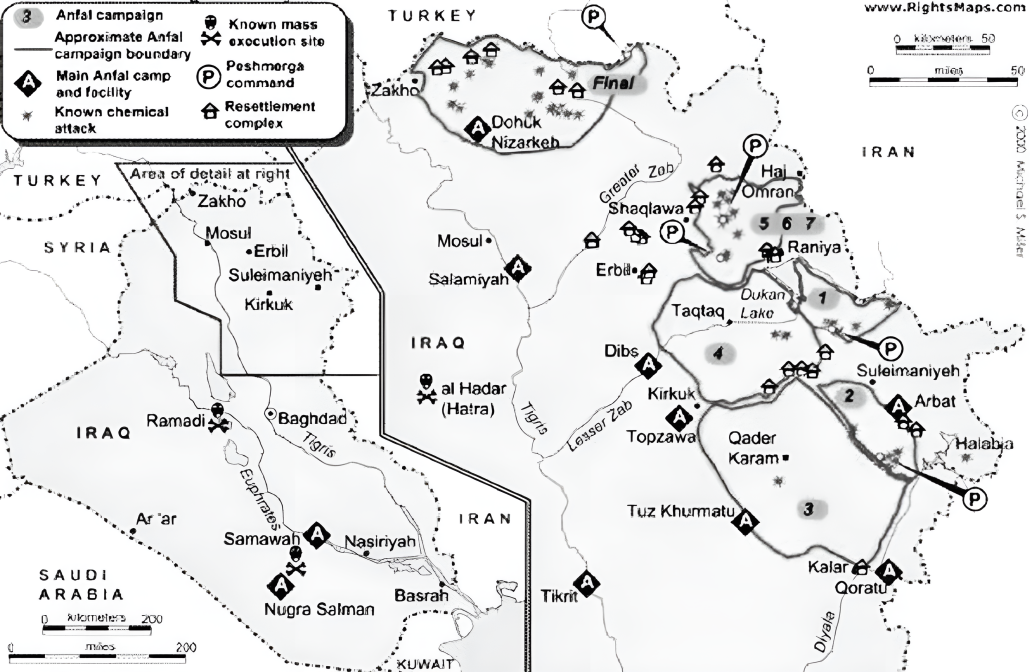
In the next phase of the Anfal Campaign, from 7 to 20 April 1988, the Garmian region east of Suleimanya became the focal point of Iraqi aggression. This campaign was marked by the disappearance of many women and children and the sinister use of deceit to lure civilians into traps.


Vivid Visuals of the Scenes

The Deceitful Amnesty

The campaign began with the Iraqi forces deploying psychological warfare. Through the loudspeakers of a mosque in Qader Karam from 10 to 12 April, an amnesty was announced, promising safety to those who surrendered. The announcement, echoing through the dusty streets and quiet fields, offered a glimmer of hope to the desperate villagers. Trusting in this false promise, many civilians—men, women, and children—made their way towards the Iraqi forces, only to find themselves trapped. Those who surrendered were detained, their hopes for safety cruelly dashed.


Chemical Attack on Tazashar

Among the many brutal tactics employed, Tazashar was the only village in the Garmian region attacked with chemical weapons. The serene village, with its modest homes and vibrant community life, was suddenly enveloped in a cloud of poison. The once-clear sky turned a sickly yellow-green as the toxic gas spread, leaving the villagers no chance to escape. The chemicals, seeping into homes and schools, claimed lives indiscriminately, turning a peaceful village into a scene of unimaginable horror.


The Bribes and Escapes

In the midst of the chaos, some civilians managed to escape the impending doom. They bribed Kurdish collaborators within the Iraqi Army, securing their passage to relative safety in Laylan or Shorsh. These fleeting moments of hope were rare, and the fear of betrayal was ever-present. For those who escaped, the journey was fraught with danger, but it was a chance to survive the relentless onslaught.


The Devastation of Garmian

Before the Anfal campaign, the Garmian region was predominantly rural, with over 600 villages dotting the landscape around the towns of Kifri, Kalar, and Darbandikhan. These villages, teeming with life and culture, were systematically targeted. The sounds of daily life—children playing, farmers working, and families gathering—were replaced by the cacophony of war: explosions, cries of despair, and the eerie silence that followed the chemical attacks.


Visualizing the Aftermath

The aftermath was a haunting tableau of destruction. Villages that once bustled with life were now ghost towns, their streets deserted and homes in ruins. The few survivors wandered aimlessly, searching for lost loved ones and a sense of normalcy in a landscape irrevocably altered by violence. The fields, which had once promised harvests, were now barren, scarred by craters and contaminated by chemicals.


Conclusion

The Anfal campaign in the Garmian region was characterized by deceit, brutality, and the indiscriminate targeting of civilians. The false amnesty, chemical attacks, and relentless assaults left an indelible mark on the Kurdish people. This phase of the campaign underscored the extremes to which Saddam Hussein’s regime would go to suppress resistance, turning promises of peace into instruments of death. The profound suffering endured by the Kurds during this period remains etched in their collective memory, a testament to their resilience and the enduring hope for justice and recognition.


Bron: Fragment uit het boek Crimes against the Kurds – Boek 1
Dit boek is verkrijgbaar via onze webshop


During the second phase of the Anfal Campaign, spanning from March 22 to April 2, 1988, the Qara Dagh region, including Bazian and Darbandikhan in the Suleimaniya governorate, became the next target of Saddam Hussein’s ruthless campaign. This phase saw a continuation of the Iraqi regime’s brutal tactics, with several villages subjected to poison gas attacks.


Vivid Visuals of the Scenes

The attacks began abruptly on March 22, immediately following the Newroz celebrations, catching the Peshmerga fighters off guard. The festive air that had marked the Kurdish New Year quickly turned to chaos and terror as the Iraqi military launched its offensive.

Villages such as Safaran, Sewsenan, Belekjar, Serko, and Meyoo became the sites of unimaginable horror as toxic gas clouds descended upon them. Imagine waking up to a normal morning, only to find the sky darkening with the approach of chemical-laden bombs. The serene valleys and rugged hillsides of Qara Dagh were engulfed in a deadly fog, suffocating the life out of everything it touched. The gas infiltrated homes, leaving families gasping for air and writhing in pain as the chemicals burned their lungs and skin. The once peaceful landscape transformed into a hellish vision of death and despair, with bodies of the fallen strewn across the streets and fields.

The Peshmerga, though seasoned in guerrilla warfare, found themselves overwhelmed by the sheer ferocity of this attack. Despite their valiant efforts, the surprise and the lethal nature of the chemical weapons inflicted severe casualties among the fighters. The sight of fallen comrades and the desperate attempts to shield civilians from the onslaught only added to the chaos and heartbreak of the situation.


Mass Displacement and Detention

As the poison gas wreaked havoc, the civilian population of the Qara Dagh region was plunged into panic. Entire villages emptied as families fled towards Suleimaniya, hoping to escape the lethal reach of the Iraqi forces. The exodus was a scene of utter desperation: families hastily gathering their belongings, children crying in confusion, and elderly villagers struggling to keep pace. The dusty roads and mountain paths became rivers of humanity, moving en masse away from the death that pursued them.

However, escape was not easy. Many fugitives were intercepted by Iraqi forces. The grim reality of the campaign became apparent as men were systematically separated from women and children. The scenes of separation were heart-wrenching: husbands and fathers pulled away, knowing they might never see their families again. The cries and protests of the women and children did nothing to sway the soldiers, whose orders were clear and unyielding. The men, taken away in military trucks, vanished into the unknown, their fates sealed by the cruelty of the regime. They were never seen again, likely executed and buried in mass graves; their lives extinguished in the name of state repression.

The women and children faced their own harrowing journey. Transported to internment camps, they were subjected to deplorable conditions. The camps were overcrowded, with inadequate food, water, and medical care. The psychological trauma of separation, compounded by the loss of their homes and loved ones, left deep scars on the survivors.


The Aftermath

Those who managed to escape the immediate grasp of the Iraqi forces fled to the Garmian region, seeking refuge and safety. The sight of these exhausted, traumatized families arriving in Garmian painted a stark picture of the human cost of the Anfal Campaign. Their stories of survival, filled with scenes of horror and acts of bravery, added to the growing narrative of Kurdish suffering and resilience.


Conclusion

Anfal Phase II, though of shorter duration, was marked by an intense and brutal use of chemical weapons that inflicted severe casualties and widespread displacement. The horrors experienced by the Kurdish population during this phase underscore the extreme lengths to which Saddam Hussein’s regime was willing to go to crush resistance and terrorize civilians. The vivid and tragic scenes of chemical attacks, mass detentions, and the desperate flight of villagers highlight the profound human cost of the Anfal Campaign, a cost that continues to shape Kurdish identity and their enduring quest for justice and autonomy.


Bron: Fragment uit het boek Crimes against the Kurds – Boek 1
Dit boek is verkrijgbaar via onze webshop


The first stage of the Anfal Campaign, conducted between 23 February and 18 March 1988, commenced with a ferocity that foreshadowed the horrors to come. In the early hours of 23 February, the tranquility of the Kurdish countryside was shattered by the thunderous booms of artillery and the ominous whine of incoming air strikes.


Vivid Visuals of the Scenes

Under the cover of darkness, Iraqi forces launched a relentless barrage, lighting up the night sky with explosions that cast eerie shadows over the rugged terrain. The initial strikes targeted key positions in the Jafali Valley, home to the Patriotic Union of Kurdistan’s (PUK) headquarters near the Iranian border, as well as command centers in Sargallu and Bargallu. The air was thick with smoke and the acrid smell of burning as buildings crumbled under the assault, and the once-quiet valley echoed with the sounds of war.

Several hours into the onslaught, ground forces advanced, meeting fierce resistance from the peshmerga fighters who were determined to defend their homeland. The battles raged across a vast theater encompassing approximately 1,154 square kilometers (445 square miles), transforming serene villages into battlegrounds. The peshmerga, skilled in guerrilla warfare, engaged in desperate, close-quarter combat amidst the mountainous terrain, their determination and bravery starkly contrasted by the overwhelming firepower of the Iraqi forces.


Chemical Attacks on Villages

As the battles intensified, the villages of Gwezeela, Chalawi, Haladin, and Yakhsamar experienced a new horror. Poison gas attacks turned the air itself into a weapon. The silent, creeping clouds of toxic chemicals infiltrated homes, schools, and places of worship, leaving devastation in their wake. Villagers, caught unaware, were engulfed by the invisible poison. Families collapsed where they stood, overcome by the searing pain in their lungs and the blistering of their skin. The streets, once filled with the daily bustle of life, became scenes of chaotic desperation, with people stumbling, gasping for breath, and ultimately succumbing to the lethal fumes.


The Capture and Retaliation in Halabja

In mid-March, a significant development unfolded as the PUK, in alliance with Iranian troops and other Kurdish factions, managed to capture the town of Halabja. This strategic victory, however, provoked a horrific retaliation. On 16 March 1988, Halabja became the site of one of the most infamous chemical attacks in history. Iraqi aircraft dropped canisters filled with a lethal cocktail of mustard gas and nerve agents over the town.

The aftermath was apocalyptic. The attack claimed the lives of several thousand Kurdish civilians, many of them women and children. The streets were littered with bodies—men, women, and children who had tried in vain to escape the toxic onslaught. The survivors, those who managed to find a momentary respite from the gas, faced severe burns, blindness, and long-term health complications. The town of Halabja, once a vibrant community, was reduced to a haunting tableau of death and despair.


Conclusion

The first stage of the Anfal Campaign set a grim precedent for the brutality that was to follow. The calculated use of artillery, air strikes, and chemical weapons against the Kurdish population illustrated the extreme measures Saddam Hussein’s regime was willing to employ to crush resistance. The harrowing scenes of destruction and death during this phase left an indelible mark on the Kurdish people, encapsulating the profound suffering and resilience that would come to define their collective memory of Anfal.


Bron: Fragment uit het boek Crimes against the Kurds – Boek 1
Dit boek is verkrijgbaar via onze webshop


The Anfal campaign, a ruthless counterinsurgency operation, was carried out by Ba’athist Iraq from February to September 1988, during the Iraqi–Kurdish conflict at the tail end of the Iran–Iraq War. This brutal campaign aimed to eliminate Kurdish rebel groups and arabize strategic parts of the Kirkuk Governorate. Led by Ali Hassan al-Majid on the orders of President Saddam Hussein, Iraqi forces committed severe atrocities against the local Kurdish population, predominantly civilians.


Scenes of Devastation

The scenes of the Anfal campaign were nothing short of apocalyptic. Entire Kurdish villages were razed to the ground, leaving behind nothing but charred remnants and desolate landscapes. The air was thick with the acrid smell of burning homes, and the cries of the displaced echoed through the valleys. Families were torn apart as men were separated from their loved ones, often never to be seen again.


Mass Executions

Mass executions were carried out with ruthless efficiency. In fields and deserted locations, Kurdish men and boys were lined up and shot, their bodies falling into hastily dug mass graves. The earth, stained with blood, bore silent witness to the scale of the massacre. The once fertile soil, now saturated with the lifeblood of its people, stood as a grim testament to the horrors inflicted.


Chemical Attacks

Chemical weapons, including mustard gas and nerve agents, were deployed in a shocking display of brutality. The attack on the town of Halabja became emblematic of this cruelty. As bombs rained down, a cloud of lethal gas spread across the town, indiscriminately killing about 5,000 civilians. Survivors recounted scenes of utter horror: entire families lying lifeless, children clinging to their mothers, and streets strewn with bodies. The air, once filled with the sounds of life, was now a silent, deadly fog, choking any who dared breathe it in.


Lasting Impact and Identity

In 1993, Human Rights Watch released a report on the Anfal campaign based on documents captured by Kurdish rebels during the 1991 uprisings in Iraq. HRW described the campaign as a genocide, estimating between 50,000 and 100,000 deaths. However, a 2007 Hague court ruling disputed this characterization, stating that the evidence from the documents was not sufficient to establish the charge of genocide. While many Iraqi Arabs reject claims of mass killings of Kurdish civilians during Anfal, the event remains a significant element of Kurdish national identity.


Conclusion

The Iran–Iraq War and the subsequent Anfal campaign inflicted unprecedented devastation and human cost. For the Kurds, it was a chapter of immense suffering and loss, yet also of resilience and enduring hope. The Kurds’ story, deeply rooted in the history of the region, deserves recognition and understanding beyond its borders. It sheds light on the profound impact of war on those who are often forgotten, highlighting the need for empathy and remembrance.


Background

Following the Iraqi invasion of Iran in 1980, the rival Kurdish opposition parties in Iraq—the Patriotic Union of Kurdistan (PUK) and Kurdistan Democratic Party (KDP), along with other smaller Kurdish factions—experienced a revival in their fortunes. Kurdish fighters, known as peshmerga, engaged in guerrilla warfare against the Iraqi government, gradually establishing effective control over the Kurdish-inhabited mountainous areas of northern Iraq.


Kurdish Gains Amid Chaos

As the Iran-Iraq War progressed, Iran launched counteroffensives into Iraqi territory. The peshmerga capitalized on the ensuing chaos to gain significant ground in rural Kurdish regions. Moving stealthily through the rugged terrain, they infiltrated towns and cities, creating a formidable stronghold in the north. Their presence grew stronger, emboldened by the disarray of the Iraqi forces.


Brutal Retaliation

In 1983, the Iraqi government retaliated with extreme measures. A harrowing crackdown ensued, resulting in the arrest and execution of 8,000 Barzani men. The Barzanis, a prominent Kurdish tribe, were targeted with ruthless precision, their men rounded up and mercilessly killed. The anguished cries of the mothers and children left behind echoed through the mountains, a chilling reminder of the regime’s capacity for brutality.


The Chemical Horror Begins

This period also marked a horrific turning point in the conflict. During the battle for Haj Omran, the Iraqi government used chemical weapons against the Kurds for the first time. The peshmerga, caught off guard by this new form of warfare, suffered devastating losses. The air became a lethal fog, and the once serene valleys were filled with the agonized screams of those succumbing to the invisible poison. This brutal tactic foreshadowed the widespread atrocities that would later characterize the Anfal campaign.


Visualizing the Chaos

Imagine the verdant Kurdish mountains, their lushness marred by the relentless assault of chemical bombs. Trees, once symbols of life and resilience, stood twisted and blackened. The air, once crisp and pure, was now thick with the acrid stench of chemicals. Fields, where children had once played, became scenes of unspeakable horror as gas drifted silently over the land, claiming lives indiscriminately.


The Foreshadowing of Anfal

The use of chemical weapons at Haj Omran was a grim precursor to the Anfal campaign. The Kurdish fighters, resilient and determined, faced a new and terrifying form of warfare. The peshmerga, whose very name means “those who face death,” continued their struggle with renewed urgency, knowing the stakes had been raised to unimaginable heights. This period of intense conflict and suffering set the stage for the horrors that would later unfold during Anfal, forever altering the course of Kurdish history.

The Iran-Iraq War and the subsequent events were marked by immense suffering and loss for the Kurds, yet also by their indomitable spirit and enduring hope. This background, rich in vivid imagery and harrowing experiences, underscores the resilience of a people who have faced unimaginable adversities and continue to fight for their survival and identity.


The Anfal Name

“Al Anfal,” literally meaning “the spoils (of war),” was cynically used to describe the military campaign of extermination and looting against the Kurds. This term is also the title of the eighth sura, or chapter, of the Qur’an, which recounts the victory of 313 followers of the new Muslim faith over almost 900 non-Muslims at the Battle of Badr in 624 AD.

During the Anfal campaign, this religious reference was twisted to justify the widespread atrocities. Kurdish collaborators with the Baathists, known as Jash, were told that taking cattle, sheep, goats, money, weapons, and even women was halal (religiously permitted or legal). This grotesque manipulation of religious principles added a deeply sinister dimension to the campaign.

The scenes during the Anfal campaign were harrowing. Kurdish villages, once vibrant with life, were reduced to smoldering ruins. Homes were set ablaze, filling the air with thick, choking smoke. The silence of the valleys was shattered by the sound of explosions, gunfire, and the desperate cries of families being torn apart. Men and boys were systematically rounded up and executed in cold blood, their bodies discarded in mass graves.

As the Iraqi forces advanced, they left a trail of devastation. Livestock, the livelihood of many Kurdish families, were either killed or stolen. The Jash, emboldened by the promise of plunder, swept through villages, looting everything of value. They took cattle, sheep, goats, and anything else they deemed valuable. The scenes were chaotic and brutal; children wailed as their mothers were dragged away, and elderly people, unable to flee, were left to perish in the flames of their burning homes.

In the town of Halabja, the use of chemical weapons brought an especially horrifying level of destruction. Bombs containing mustard gas and nerve agents exploded, releasing clouds of toxic fumes that swept through the town. The air became a deadly miasma, causing people to collapse where they stood, their skin blistering and eyes burning. The streets were littered with the bodies of the dead, including infants and the elderly, lying lifelessly in each other’s arms.

The use of the name “Anfal” for such a campaign added a layer of religious mockery to the already grotesque brutality. It signaled not only a physical assault on the Kurdish people but also an ideological one, where the tenets of faith were perverted to sanction unspeakable violence and theft. This deeply cynical appropriation of religious texts to justify the massacre and pillaging of Kurdish communities underscores the cruelty and calculated nature of Saddam Hussein’s regime.
Summary

The Anfal campaign began in February 1988 and continued until August or September of the same year. It involved ground offensives, aerial bombing, chemical warfare, systematic destruction of settlements, mass deportation, and firing squads. The campaign was led by Ali Hassan al-Majid, a cousin of Iraqi President Saddam Hussein, who hailed from Saddam’s hometown of Tikrit.

The Iraqi Army was supported by Kurdish collaborators known as the Jash forces, whom the Iraqi government armed. These forces guided Iraqi troops to Kurdish villages, many of which were not marked on maps, and to their hideouts in the mountains. The Jash forces often made false promises of amnesty and safe passage to lure the Kurds into traps.

Iraqi state media extensively covered the Anfal campaign, using its official name. Approximately 1,200 Kurdish villages were destroyed during the operation. To many Iraqis, Anfal was presented as an extension of the ongoing Iran–Iraq War, although its victims were overwhelmingly Kurdish civilians.


Vivid Visualization of the Scenes

The Anfal campaign unleashed a torrent of destruction across Kurdish regions, leaving behind scenes of unimaginable devastation.

Ground Offensives and Aerial Bombing: The roar of military trucks and the thunder of artillery shattered the tranquility of Kurdish villages. Families, huddled in their homes, were jolted awake by the deafening explosions of aerial bombs. Buildings crumbled under the relentless assault, sending plumes of smoke and dust into the sky. The earth shook with each detonation, and the air was thick with the acrid smell of burning debris.

Chemical Warfare: In towns like Halabja, the nightmare took on an even more sinister form. Chemical bombs fell from the sky, releasing clouds of toxic gas that spread rapidly through the streets. People gasped for breath, their skin blistering and eyes burning from the poisonous fumes. Entire families were found lifeless in their homes, children clinging to their mothers, frozen in their decisive moments of agony.

Systematic Destruction of Settlements: The Iraqi forces moved systematically from village to village, leaving a trail of devastation in their wake. Homes were set ablaze, fields were torched, and livestock was slaughtered or stolen. Villagers watched helplessly as everything they had built and nurtured was reduced to ashes. The once-vibrant communities were transformed into ghostly landscapes of blackened ruins and scorched earth.

Mass Deportation and Firing Squads: Survivors were rounded up and forcibly deported, packed into trucks like cattle and driven to desolate camps. Men and boys were separated from their families, marched to remote locations, and executed end masse. The ground was stained with their blood, and mass graves were hastily dug to conceal the evidence of these atrocities.

Kurdish Collaborators (Jash Forces): The Jash forces, armed and emboldened by the Iraqi government, played a pivotal role in the campaign. They led Iraqi troops to hidden villages and mountain hideouts, often betraying their own neighbors. With false promises of amnesty and safe passage, they lured unsuspecting Kurds into deadly traps. The sense of betrayal and treachery added a deep psychological scar to the already immense physical suffering.

Destruction of Villages: Approximately 1,200 Kurdish villages were systematically destroyed. The once-lively hamlets, filled with the sounds of daily life and the laughter of children, were replaced by eerie silence and desolation. The remains of homes, schools, and mosques stood as grim reminders of the lives that had been erased.

Media Coverage and Perception: Iraqi state media covered the Anfal campaign extensively, portraying it as a necessary military operation. To many Iraqis, Anfal was presented as part of the broader Iran–Iraq War, masking the targeted extermination of Kurdish civilians under the guise of national security. This propaganda further obscured the true horror of the campaign from the wider world.

These vivid scenes underscore the brutal reality of the Anfal campaign, a calculated and devastating assault on the Kurdish population that left an indelible mark on their collective memory and identity.


Campaign

Hassan al-Majid ascended to the role of secretary-general of the Ba’ath Party’s Northern Bureau. This appointment, seemingly innocuous on the surface, held profound implications for Iraqi Kurdistan. As the head of this bureau, al-Majid wielded unprecedented authority over the Kurdish region, consolidating power and control under the regime’s iron grip.

With al-Majid at the helm, the Ba’ath Party’s Northern Bureau became a fearsome instrument of oppression and subjugation. Under his leadership, the bureau orchestrated a campaign of terror and brutality, targeting Kurdish dissidents and civilians alike. The appointment of al-Majid signaled a dark chapter in the Kurdish struggle for autonomy, as the regime intensified its efforts to crush any semblance of opposition and enforce its dominance over the region.

For the Kurdish population, al-Majid’s appointment represented a looming specter of violence and persecution. His tenure would be marked by atrocities and human rights abuses, culminating in the infamous Anfal campaign, a systematic campaign of extermination and looting against the Kurds. The appointment of al-Majid as secretary-general of the Ba’ath Party’s Northern Bureau stands as a stark reminder of the regime’s ruthless determination to quash dissent and maintain its grip on power at any cost.


Military Operations and Chemical Attacks

The Anfal Campaign, officially conducted in 1988, unfolded in eight devastating phases, each meticulously designed to obliterate Kurdish resistance and terrorize the population. These phases, known as Anfal 1 through Anfal 8, systematically targeted areas controlled by the Patriotic Union of Kurdistan (PUK), culminating in the final assault on regions under the Kurdish Democratic Party (KDP) in northwest Iraqi Kurdistan.


Vivid Visuals of the Scenes

The orchestrated brutality of Anfal began with the relentless advance of the Iraqi military into Kurdish territories. Villages nestled in the serene, mountainous landscapes of Kurdistan were abruptly transformed into war zones. The once peaceful air was pierced by the roar of approaching tanks and the staccato of machine gun fire. Helicopters, black and ominous against the sky, hovered like predatory birds, their rotors slicing through the air as they unleashed barrages of missiles onto unsuspecting villages below.

Ground offensives were marked by an eerie efficiency. Iraqi soldiers, their faces masked with determination and cruelty, stormed into villages, dragging men from their homes and lining them up for execution. The sounds of gunfire echoed through the mountains, interspersed with the heart-wrenching cries of families torn apart. Women and children were herded into trucks, their faces etched with fear and despair, as they were driven away to overcrowded, squalid camps.

The final stages of the Anfal Campaign, targeting the KDP-controlled areas, were no less horrifying. In late August and early September 1988, these regions experienced the full fury of the Iraqi military’s arsenal. Chemical attacks became a ghastly hallmark of the campaign, with mustard gas and nerve agents deployed mercilessly. The attack on Halabja stands out in its sheer horror: as bombs containing lethal chemicals exploded, an invisible, deadly fog spread through the town. The immediate aftermath was catastrophic people fell where they stood, their skin blistering and lungs burning, gasping for breath in their final, agonizing moments.


Chemical Attacks

The chemical attacks were scenes of indescribable horror. Imagine a tranquil village suddenly engulfed in a silent, deadly cloud. The chemicals crept insidiously into homes and shelters, sparing no one. The streets, moments before filled with the bustle of daily life, became eerily silent, broken only by the sounds of choking and the desperate cries for help. Survivors stumbled through the toxic haze, eyes burning, skin blistering, and lungs seared by the invisible poison. The dead and dying lay scattered across the ground, their bodies twisted in the throes of their final, agonized moments.

In the aftermath, the landscape of Kurdish towns and villages was one of utter devastation. The ground was littered with remnants of human life—clothing, toys, and personal belongings abandoned in the frantic rush to escape. The air hung heavy with the acrid smell of chemical residues and the haunting silence of death. Those who survived bore the physical and psychological scars of the attacks, their bodies and minds forever marked by the horrors they had endured.


Conclusion

The Anfal Campaign’s military operations and chemical attacks left a lasting, vivid impression of the extreme measures taken by Saddam Hussein’s regime to suppress Kurdish resistance. The systematic destruction and indiscriminate brutality inflicted upon the Kurdish population not only devastated the region but also etched a permanent scar on the collective memory of the Kurdish people. The chilling efficiency of the Iraqi military’s operations and the grotesque use of chemical weapons underscore the profound cruelty of the campaign, serving as a stark reminder of the depths of human atrocity and the urgent need for international vigilance and intervention.


Bron: Fragment uit het boek Crimes against the Kurds – Boek 1
Dit boek is verkrijgbaar via onze webshop


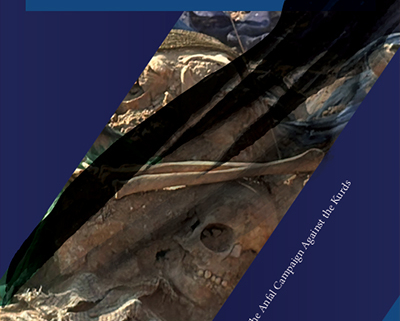
 

Crimes against the Kurds, Genocide in Iraq: The Anfal Campaign against the Kurds (Book 1)


ISBN/EAN: 9789083452616
Title: Crimes Against the Kurds (Book 1)
Subtitle: Genocide in Iraq: The Anfal Campaign Against the Kurds
Editor: Shanidar Publisher Group
Contributor: Kurdistan Chronicle
Publisher: Shanidar Publisher
Bibliographic Imprint: Shanidar Publisher
NUR Code: 689
NUR Description: War and Peace
Series: The Anfal Campaign
Series Number: 1
Edition: 1
Illustrations: Kurdistan Chronicle
Pages: 84
Language: English
Format: Paperback / Softback
Publication Date: 2025


Crimes Against the Kurds
Genocide in Iraq – The Anfal Campaign Against the Kurds (Book 1)

by Miran Abraham

The Eight-Year War Between Iran and Iraq: The Suffering of the Kurds: From 1980 to 1988, Iran and Iraq waged the longest conventional war of the 20th century—a brutal conflict that reshaped the region through relentless violence and widespread destruction. Cities and villages were obliterated, chemical weapons poisoned the air, and countless lives were forever scarred. Yet, while the war remains a defining chapter for those who endured it, it is a conflict that is often misunderstood or overlooked in much of the world, especially in the West.

Among the countless victims of this devastating war, the Kurds suffered disproportionately. Their lands, situated along the contested border between Iraq and Iran, became a deadly battleground. For centuries, the Kurds have been viewed with suspicion and hostility by neighbouring powers, regarded as perpetual enemies. During the war, this historical mistrust culminated in unimaginable atrocities.

Over a thousand Kurdish villages were reduced to rubble, and more than half a million Kurds lost their lives. Fertile plains and rolling hills, once the lifeblood of Kurdish communities, were scarred by craters and stained with blood. The air, which once carried the melodies of Kurdish songs and the whispers of nature, now reverberated with the sounds of explosions, the screams of the wounded, and the laments of those mourning their loved ones.

In scenes reminiscent of a dystopian nightmare, chemical weapons cast a toxic shadow over the landscape. Clouds of poison drifted silently, leaving behind trails of death and unspeakable suffering. Men, women, and children, their skin blistered and eyes burning, collapsed in convulsions, gasping for breath. Survivors of these attacks, marked by both physical scars and psychological torment, carried the weight of these horrors for the rest of their lives.

Yet even amid such devastation, the Kurdish spirit remained unbroken. Families sought refuge in makeshift shelters, clinging to unity as their only solace. Elders, the keepers of Kurdish culture and memory, recounted tales of a life before the war, nurturing resilience and identity in the younger generation. Despite centuries of oppression, the Kurds persevered, their fight for survival and recognition undeterred by the atrocities they faced.

The Iran–Iraq War, with its unprecedented destruction and staggering human cost, stands as a powerful testament to the horrors of conflict. For the Kurds, it represents a chapter of profound suffering, yet also of unyielding resilience and hope. Their story, deeply intertwined with the history of the region, is one that demands recognition beyond its borders—a reminder of the enduring impact of war on those who are too often forgotten.

Through the lens of Kurdish suffering, this narrative serves not only as a record of loss but also as a call for justice, understanding, and an end to the cycles of violence that have defined the region for far too long.

Crimes against the Kurds, Genocide in Iraq: The Anfal Campaign Against the Kurds – The Documents (Book 2)


ISBN/EAN: 978-90-834526-2-3
Title: Crimes Against the Kurds (Book 2)
Subtitle: Genocide in Iraq: The Anfal Campaign Against the Kurds – The Documents
Editor: Shanidar Publisher Group
Contributor: Kurdistan Chronicle
Publisher: Shanidar
NUR Code: 689
NUR Description: War and Peace
Series: The Anfal Campaign
Series Number: 2
Edition: 1
Illustrations: Kurdistan Chronicle
Pages: 220
Language: English
Format: Paperback / Softback
Publication Date: 2025


Crimes Against the Kurds
Genocide in Iraq: The Anfal Campaign Against the Kurds – The Documents (Book 2)

This series, to be published by Shanidar with the support of Kurdistan Chronicle, presents a harrowing, meticulously detailed account of the atrocities committed against the Kurdish population during the Anfal Campaign orchestrated by Saddam Hussein’s Ba’athist regime in the late 1980s. This book provides a vivid portrayal of the genocide, emphasizing the systematic and brutal efforts to annihilate Kurdish identity and existence.
The Anfal Campaign, named after a Quranic term meaning “spoils of war,” saw the Iraqi military execute a coordinated and ruthless attack on Kurdish regions. Serene Kurdish villages, once filled with life and culture, were transformed into scenes of devastation. Military convoys, tanks, and soldiers invaded these villages, while helicopters and jets dropped bombs, setting homes ablaze and causing widespread panic and destruction. Chemical weapons, including mustard gas and nerve agents, were deployed, adding an insidious layer of horror to the genocide. Entire families were found lifeless, their bodies bearing the brutal marks of chemical attacks.
The collaboration of Jash forces, Kurdish collaborators armed and incentivized by the regime, exacerbated the tragedy. These forces guided Iraqi troops to hidden villages and mountain refuges, betraying their own people and leading to further chaos and death. The campaign resulted in the obliteration of approximately 5,200 Kurdish villages, leaving behind a landscape of charred rubble and scorched earth.
The book delves into the background and context of the Kurdish struggle for autonomy, highlighting the socio-political dynamics that led to the Anfal Campaign. It provides a vivid visualization of the scenes, describing the vibrant Kurdish regions before the campaign and the subsequent horrors inflicted upon them. The psychological and socio-economic impact on the Kurdish population is explored, revealing the deep scars left by the genocide.
Despite the initial muted international response, the book documents how global attention eventually turned towards the plight of the Kurds. Efforts to document and acknowledge the genocide gained momentum, leading to significant legal and symbolic victories. The recognition of the Anfal Campaign as genocide by a court in The Hague in 2005 and the conviction of key figures of Saddam Hussein’s regime, including Ali Hassan al-Majid, “Chemical Ali,” in 2007, are notable milestones in the pursuit of justice.
The book emphasizes the importance of remembrance and the enduring resilience of the Kurdish people. Memorials and commemorations serve as solemn tributes to the victims, ensuring that the atrocities are not forgotten. The Anfal Campaign stands as a critical reminder of the devastating impact of state-sponsored violence and the urgent need for international vigilance to prevent such genocides in the future.
Overall, “Crimes Against the Kurds: Genocide in Iraq – The Anfal Campaign against the Kurds” is a poignant and powerful testament to the suffering and resilience of the Kurdish people. It underscores the need for justice, recognition, and a collective moral stance against oppression and violence.

Crimes Against the Kurds (Book 3)

  • Legal qualification of operation al-Anfal
  • Legal qualifications of the actions taken against the Yazidis

Professor PAN Dr. Ireneusz C. Kamiński
Department of Public International Law
Institute of Law Studies
Polish Academy of Sciences


ISBN/EAN: 9789083452630
Title: Crimes Against the Kurds (Book 3)
Subtitle: Legal qualification of operation al-Anfal, Legal qualifications of the actions taken against the Yazidis

Author: Professor PAN Dr. Ireneusz C. Kamiński

Editor: Shanidar Publisher Group
Contributor: Kurdistan Chronicle
Publisher: Shanidar Publisher
Bibliographic Imprint: Shanidar Publisher
NUR Code: 689
NUR Description: War and Peace
Series: The Anfal Campaign
Series Number: 3
Edition: 1
Illustrations: Kurdistan Chronicle
Pages: 84
Language: English
Format: Paperback / Softback
Publication Date: 2025


Auteur author: Ireneusz Cezary Kamiński
Born: December 10, 1963 | Nationality: Polish

Ireneusz Cezary Kamiński is a distinguished lawyer and sociologist, holding degrees from the Faculty of Law and Administration at the University of Silesia in Katowice, the Faculty of Philosophy at the Jagiellonian University in Kraków, and the European Academy of Legal Theory in Brussels. He is currently a professor at the Institute of Legal Studies of the Polish Academy of Sciences in Warsaw, where he chairs the Department of International Public Law. He also serves as a lecturer at the Jagiellonian University in the Department of Comparative Studies of Civilizations.

Over the course of his career, Professor Kamiński has received numerous awards for his contributions to scientific research, including recognition from the Foundation for Polish Science, the Foundation of European Law, and the Rector of the Jagiellonian University. He served on the Council of the National Science Center from 2012 to 2016 and was an ad hoc judge at the European Court of Human Rights in Strasbourg from 2014 to 2016.

Prof. Kamiński is the author of eight books and nearly 200 scientific publications, and his work has appeared in prominent newspapers such as Rzeczpospolita, Dziennik Gazeta Prawna, Gazeta Wyborcza, and Dziennik Polski.

He specializes in human rights law, with a particular focus on the European Convention on Human Rights. His other areas of research include public international law, comparative law (with an emphasis on legal cultures), and legal theory.

An expert on freedom of expression and media freedom for the Council of Europe, Prof. Kamiński has collaborated with numerous national and international non-governmental organizations dedicated to human rights protection, including the Helsinki Foundation for Human Rights, Article XIX, Amnesty International, the Justice Initiative, and the Open Society Institute.

Prof. Kamiński is the editor-in-chief of Kwartalnik o Prawach Człowieka and serves on the editorial board of the European Judiciary Review. He is also a regular reviewer for several domestic and international academic journals.

In his legal practice, he has represented clients in numerous proceedings before the European Court of Human Rights in Strasbourg and the United Nations Human Rights Committee. Notably, he represented the families of the victims of the Katyn massacre.

ISBN/EAN: 978-90-834526-0-9
Title: Yazidis Before the Arrival of ISIS
Author: Aso Haji
Contributor: Kurdistan Chronicle
Translator: Chiman Salih
Publisher: Shanidar
Bibliographic Imprint: Shanidar
NUR Code: 719
NUR Description: Other Religions
Edition: 1
Illustrations: Kurdistan Chronicle
Pages: 122
Language: English
Format: Hardback
Publication Date: September 1, 2024


Unveiling the Yazidis: A Chronicle of History and Heritage

By Aso Haji

Before ISIS cast a shadow over the Yazidis, this ancient community was largely unknown to the world. The tragic events of August 2, 2014, however, brought their plight into sharp focus. That day, ISIS terrorists captured Shengal, leading to a genocide that targeted Yazidi girls and women for their ethnicity and faith, actions twistedly justified by misinterpretations of religious texts. This horror was the latest in a long history of persecution; Yazidis have endured seventy-four episodes of ethnic cleansing, or Decrees (Farman), at the hands of followers of various religions over centuries.

Despite these grim episodes, the Yazidis’ story is also one of resilience and rich cultural heritage. The Yazidi religion, one of the world’s oldest, traces its roots back to the Sumerian era. Central to their faith is the Lalish Temple, believed to be the site of the universe’s creation. Yazidi mythology and religious practices, particularly those centered on Lalish, offer a profound glimpse into their spiritual world.

This book explores the evolution of Yazidism through three historical stages: its origins in nature worship, its transition to monotheism influenced by the Prophet Abraham, and its current form shaped by the reforms of Sheikh Adi. Rich in mythology, the Yazidi faith venerates not only a singular God but also seven angels, each overseeing different aspects of existence.

The book delves into the significance of Lalish, a sacred sanctuary for Yazidis, where ancient rituals and ceremonies like the Dance of Creation and the Qantar are performed. These practices not only preserve their heritage but also reinforce the spiritual bonds within the community.

“Yazidis Before the Arrival of ISIS” is a comprehensive account that goes beyond the narrative of suffering to celebrate the enduring spirit and cultural richness of the Yazidi people, offering readers an in-depth understanding of a resilient community.


by Hemin Baban


Kurdistan is the land of the Sun and fire and has been home to prophets from different sects and religions for thousands of years. With shrines and holy places scattered throughout the land, Kurdistan bears witness to the peaceful coexistence of different religious and cultural components.

In the historic city of Alqosh, specifically in the Qasha neighborhood northwest of the city, lies the shrine of a Jewish prophet known as Nahum the Prophet, or Nahum Alqoshi, who is respected by Muslims, Christians, and Jews alike. The shrine is a religious landmark of great significance to followers of the Jewish religion.

Despite its simplicity, the tomb of the prophet Nahum – who is mentioned in the Old Testament and the Hebrew Bible – is distinguished by its unique architecture. It is surrounded by an eight-meter-high wall, with an inner courtyard that occupies a third of the total area of ​​the building. The entrance is a stone door engraved with ancient symbols, and bare stones cover the floor of the building. The old wooden doors are decorated with copper and iron and retain their beauty despite the passage of time. In the middle of the building is a rectangular tomb covered with green fabric, and the roof is supported by 22 columns topped with crescent arches.

Inside the tomb, the walls are decorated with six panels engraved in Hebrew that narrate aspects of the prophet’s life. The tomb is surrounded by a handmade metal window and the complex includes a religious school, a cellar, and cabinets for holy books, in addition to an internal cave.

Antiquity’s diversity

Lara Zara, the mayor of Alqosh, confirmed in an interview with Kurdistan Chronicle that the shrine “is an integral part of the city’s history, and the coexistence between the residents of the region represents a model to be emulated in Kurdistan and Iraq.”

“The diversity of ethnic, religious, and sectarian components in the region is a unique case and a source of pride for everyone, as everyone lives in harmony without notable problems,” she said.

The shrine of the Prophet Nahum symbolizes the religious and cultural coexistence in Kurdistan, where believers of different religions meet in one place, emphasizing the common human values ​​and mutual respect that have always distinguished this region from others.

Zara explained how agriculture plays a pivotal role in establishing the principles of coexistence among the town’s components. “I hope that the shrine will be transformed into a major source of revitalization for the city’s tourism sector,” she said.

Historically, Jewish sources define Kurdistan as the oldest homeland to which Jews were exiled after their captivity in Babylon. It is believed that the origin of Kurdish Jews dates to the ten tribes of the Children of Israel who were exiled in the eighth century BC. The number of Kurdish Jews was estimated at 50,000 or more before 1948, when their Iraqi citizenship was revoked and their properties confiscated.

The Prophet Nahum was the seventh of the prophets whose prophecy was recorded in the Book of the Twelve. His name in Hebrew means “counselor” or “comforter,” and he is the writer of one of the books of the Old Testament that predicted the destruction of Nineveh, the capital of the Assyrian kingdom. His prophecy was fulfilled in 612 BC by the Babylonians and Medes.

According to the 12th century AD Jewish traveler Benjamin of Tudela, Nahum lived in the early seventh century BC, and his tomb is in the village of Alqosh in the Kurdistan Region. The Book of Nahum is the 34th book of the Old Testament and consists of three chapters that predict the fall of Nineveh.

Revitalization

Modern historians say that the tomb of the Prophet Nahum was built in 1796, but was subjected to acts of vandalism and neglect, especially during the reign of the former Ba’athist regime of Iraq. Yet, thanks to the efforts of the Kurdistan Regional Government and the U.S. Consulate in Erbil, the tomb was restored and saved from complete demolition in 2020.

Ranjdar Cohen, head of the Aramic Organization for Communal Peace Development, points out that the Jewish community suffers from changes that occur to Jewish places and shrines when they are restored. Reportedly, the removal of the Star of David from the tomb of the Prophet Nahum is likewise changed.

In recent years, the shrine has become a prominent tourist attraction, visited by people of different religions to seek blessings. “The shrine has become a symbol and an integral part of the city’s history and heritage, pointing to the peaceful coexistence between different ethnic groups, sects and religions,” said Qahtan Salim, a local resident living on the outskirts of Alqosh.

The establishment of Israel in 1948 was a turning point in the lives of the Jews of Kurdistan and Iraq, leading the vast majority to emigrate in 1949. However, a few Jews remained in the Kurdistan Region but were forced to change their religion or hide it out of fear of persecution.

The fall of the former regime in 2003 strengthened coexistence among different religious groups, Cohen explained, noting that the strength of understanding that exists in Kurdistan helped some Jews to reveal the religion of their fathers and grandfathers, and some even began to practice their religious rituals openly and ignore politics.

Although current Iraqi laws prevent Jewish tourists from traveling to Iraq and Kurdistan, which negatively affects religious tourism, Cohen states that many Jews wish to visit the shrines of their prophets, especially the shrine of the Prophet Nahum, which holds a special place for them.

Before the displacement of the Jews and the establishment of Israel, the shrine of the Prophet Nahum was a destination for many Jews coming from various Kurdish and Iraqi cities and towns to worship and practice religious rituals, in addition to holding weddings and other ceremonies.

The shrine of the Prophet Nahum remains evidence of Kurdistan’s rich history and cultural and religious diversity and a symbol of the peaceful coexistence that has characterized the region throughout the ages.


Hemin Baban is a Kurdish journalist based in Erbil.

by Nasih Ali Khayat


Pir Shalyar’s message is celebrated every year in the Hawraman region with a rich tradition of rituals and gatherings that convey profound lessons about unity, sacrifice, and cultural pride. This tradition, believed to be over 1,000 years old, has its roots in ancient Zoroastrian customs, predating the arrival of Islam in the region. Its longevity underscores its deep cultural and spiritual significance, reflecting the enduring heritage of the Kurdish people in Hawraman. The key elements of this celebration can be broken down as follows:

The day begins with children’s joy

The festivities begin at dawn, with children’s excitement setting the tone for the day. Their laughter and joy fill the air, symbolizing hope and renewal. Pir Shalyar’s message, known as “Klavrochene,” emphasizes the importance of the youth in preserving and passing down this tradition. As the purest and most enthusiastic messengers, children ensure that this cultural legacy endures across generations. Indeed, by involving children, the tradition inspires the younger generation to cherish and repeat it annually, securing its place in the future.

Sacrificing animals: a symbol of devotion

Sacrificing animals, often sheep or goat, is a central part of the celebration, symbolizing the community’s dedication to higher ideals. Sacrifice teaches participants that achieving great goals often requires letting go of personal possessions and signifies valuing the collective good and prioritizing long-term prosperity over individual gains. This act is a reminder of the community’s resilience and their commitment to building an ideal life and civilization.

Sama: a dance of peace

The Sama dance, performed during the festivities, is a rhythmic and symbolic dance where participants join hands, embodying unity and harmony. Pir Shalyar’s vision is conveyed through the dance, which illustrates that the people of Hawraman are peace-loving and cooperative. The dance demonstrates collective strength and a shared commitment to working hand-in-hand for the greater good. The performance of the Sama dance showcases the vibrant traditions of the people of Hawraman to both locals and visitors.

Dinner at Pir Shalyar’s house

The celebration culminates in a communal dinner hosted at Pir Shalyar’s house, symbolizing unity among diverse groups. The gathering highlights the importance of coming together under one roof to address common challenges and achieve shared goals. Pir Shalyar’s vision extends to fostering dialogue and cooperation among tribes to build a stronger, united community. Importantly, the event encourages discussions about collective action, including parliamentary elections, to make the region stronger and overcome adversaries.

Economic and cultural significance

The celebration draws visitors to the Hawraman region, boosting local tourism and spreading awareness about the community’s rich heritage. It serves as a platform to showcase the region’s unique culture and traditions. The men and women of Hawraman use the opportunity to sell handmade crafts, textiles, and local foods. This commercial aspect transforms the celebration into an economic opportunity, ensuring that the region benefits both culturally and financially.

A legacy of hope and resilience

Pir Shalyar is a legendary figure deeply rooted in the cultural and spiritual heritage of Hawraman, a picturesque region nestled in the Zagros Mountains. Revered as a symbol of unity, wisdom, and resilience, the celebration held each year in his honor reflects the enduring spirit of the Kurdish people.

The annual ritual of Pir Shalyar has been passed down for over a millennium, adapting over time while preserving its core values of sacrifice, unity, and cultural pride. By celebrating these traditions, the people of Hawraman not only preserve their heritage, but also inspire future generations to uphold and adapt these values in an ever-changing world. Ultimately, the event continues to strengthen community bonds, attract global attention, and reinforce the vibrant spirit of the Hawraman region.


Nasih Ali Khayat is a Kurdish photographer and journalist.