
Anfal: The Eight-Year War Between Iran and Iraq/ What Did the Kurds Experience?

The Anfal campaign, a ruthless counterinsurgency operation, was carried out by Ba’athist Iraq from February to September 1988, during the Iraqi–Kurdish conflict at the tail end of the Iran–Iraq War. This brutal campaign aimed to eliminate Kurdish rebel groups and arabize strategic parts of the Kirkuk Governorate. Led by Ali Hassan al-Majid on the orders of President Saddam Hussein, Iraqi forces committed severe atrocities against the local Kurdish population, predominantly civilians.
Scenes of Devastation
The scenes of the Anfal campaign were nothing short of apocalyptic. Entire Kurdish villages were razed to the ground, leaving behind nothing but charred remnants and desolate landscapes. The air was thick with the acrid smell of burning homes, and the cries of the displaced echoed through the valleys. Families were torn apart as men were separated from their loved ones, often never to be seen again.
Mass Executions
Mass executions were carried out with ruthless efficiency. In fields and deserted locations, Kurdish men and boys were lined up and shot, their bodies falling into hastily dug mass graves. The earth, stained with blood, bore silent witness to the scale of the massacre. The once fertile soil, now saturated with the lifeblood of its people, stood as a grim testament to the horrors inflicted.
Chemical Attacks
Chemical weapons, including mustard gas and nerve agents, were deployed in a shocking display of brutality. The attack on the town of Halabja became emblematic of this cruelty. As bombs rained down, a cloud of lethal gas spread across the town, indiscriminately killing about 5,000 civilians. Survivors recounted scenes of utter horror: entire families lying lifeless, children clinging to their mothers, and streets strewn with bodies. The air, once filled with the sounds of life, was now a silent, deadly fog, choking any who dared breathe it in.
Lasting Impact and Identity
In 1993, Human Rights Watch released a report on the Anfal campaign based on documents captured by Kurdish rebels during the 1991 uprisings in Iraq. HRW described the campaign as a genocide, estimating between 50,000 and 100,000 deaths. However, a 2007 Hague court ruling disputed this characterization, stating that the evidence from the documents was not sufficient to establish the charge of genocide. While many Iraqi Arabs reject claims of mass killings of Kurdish civilians during Anfal, the event remains a significant element of Kurdish national identity.
Conclusion
The Iran–Iraq War and the subsequent Anfal campaign inflicted unprecedented devastation and human cost. For the Kurds, it was a chapter of immense suffering and loss, yet also of resilience and enduring hope. The Kurds’ story, deeply rooted in the history of the region, deserves recognition and understanding beyond its borders. It sheds light on the profound impact of war on those who are often forgotten, highlighting the need for empathy and remembrance.
Background
Following the Iraqi invasion of Iran in 1980, the rival Kurdish opposition parties in Iraq—the Patriotic Union of Kurdistan (PUK) and Kurdistan Democratic Party (KDP), along with other smaller Kurdish factions—experienced a revival in their fortunes. Kurdish fighters, known as peshmerga, engaged in guerrilla warfare against the Iraqi government, gradually establishing effective control over the Kurdish-inhabited mountainous areas of northern Iraq.
Kurdish Gains Amid Chaos
As the Iran-Iraq War progressed, Iran launched counteroffensives into Iraqi territory. The peshmerga capitalized on the ensuing chaos to gain significant ground in rural Kurdish regions. Moving stealthily through the rugged terrain, they infiltrated towns and cities, creating a formidable stronghold in the north. Their presence grew stronger, emboldened by the disarray of the Iraqi forces.
Brutal Retaliation
In 1983, the Iraqi government retaliated with extreme measures. A harrowing crackdown ensued, resulting in the arrest and execution of 8,000 Barzani men. The Barzanis, a prominent Kurdish tribe, were targeted with ruthless precision, their men rounded up and mercilessly killed. The anguished cries of the mothers and children left behind echoed through the mountains, a chilling reminder of the regime’s capacity for brutality.
The Chemical Horror Begins
This period also marked a horrific turning point in the conflict. During the battle for Haj Omran, the Iraqi government used chemical weapons against the Kurds for the first time. The peshmerga, caught off guard by this new form of warfare, suffered devastating losses. The air became a lethal fog, and the once serene valleys were filled with the agonized screams of those succumbing to the invisible poison. This brutal tactic foreshadowed the widespread atrocities that would later characterize the Anfal campaign.
Visualizing the Chaos
Imagine the verdant Kurdish mountains, their lushness marred by the relentless assault of chemical bombs. Trees, once symbols of life and resilience, stood twisted and blackened. The air, once crisp and pure, was now thick with the acrid stench of chemicals. Fields, where children had once played, became scenes of unspeakable horror as gas drifted silently over the land, claiming lives indiscriminately.
The Foreshadowing of Anfal
The use of chemical weapons at Haj Omran was a grim precursor to the Anfal campaign. The Kurdish fighters, resilient and determined, faced a new and terrifying form of warfare. The peshmerga, whose very name means “those who face death,” continued their struggle with renewed urgency, knowing the stakes had been raised to unimaginable heights. This period of intense conflict and suffering set the stage for the horrors that would later unfold during Anfal, forever altering the course of Kurdish history.
The Iran-Iraq War and the subsequent events were marked by immense suffering and loss for the Kurds, yet also by their indomitable spirit and enduring hope. This background, rich in vivid imagery and harrowing experiences, underscores the resilience of a people who have faced unimaginable adversities and continue to fight for their survival and identity.
The Anfal Name
“Al Anfal,” literally meaning “the spoils (of war),” was cynically used to describe the military campaign of extermination and looting against the Kurds. This term is also the title of the eighth sura, or chapter, of the Qur’an, which recounts the victory of 313 followers of the new Muslim faith over almost 900 non-Muslims at the Battle of Badr in 624 AD.
During the Anfal campaign, this religious reference was twisted to justify the widespread atrocities. Kurdish collaborators with the Baathists, known as Jash, were told that taking cattle, sheep, goats, money, weapons, and even women was halal (religiously permitted or legal). This grotesque manipulation of religious principles added a deeply sinister dimension to the campaign.
The scenes during the Anfal campaign were harrowing. Kurdish villages, once vibrant with life, were reduced to smoldering ruins. Homes were set ablaze, filling the air with thick, choking smoke. The silence of the valleys was shattered by the sound of explosions, gunfire, and the desperate cries of families being torn apart. Men and boys were systematically rounded up and executed in cold blood, their bodies discarded in mass graves.
As the Iraqi forces advanced, they left a trail of devastation. Livestock, the livelihood of many Kurdish families, were either killed or stolen. The Jash, emboldened by the promise of plunder, swept through villages, looting everything of value. They took cattle, sheep, goats, and anything else they deemed valuable. The scenes were chaotic and brutal; children wailed as their mothers were dragged away, and elderly people, unable to flee, were left to perish in the flames of their burning homes.
In the town of Halabja, the use of chemical weapons brought an especially horrifying level of destruction. Bombs containing mustard gas and nerve agents exploded, releasing clouds of toxic fumes that swept through the town. The air became a deadly miasma, causing people to collapse where they stood, their skin blistering and eyes burning. The streets were littered with the bodies of the dead, including infants and the elderly, lying lifelessly in each other’s arms.
The use of the name “Anfal” for such a campaign added a layer of religious mockery to the already grotesque brutality. It signaled not only a physical assault on the Kurdish people but also an ideological one, where the tenets of faith were perverted to sanction unspeakable violence and theft. This deeply cynical appropriation of religious texts to justify the massacre and pillaging of Kurdish communities underscores the cruelty and calculated nature of Saddam Hussein’s regime.
Summary
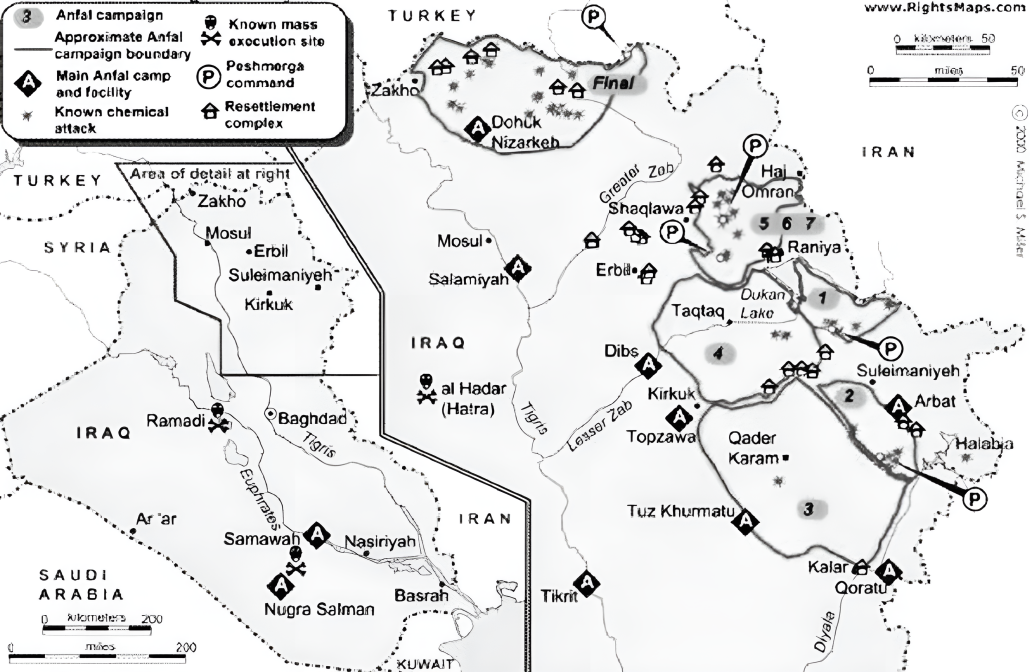
The Anfal campaign began in February 1988 and continued until August or September of the same year. It involved ground offensives, aerial bombing, chemical warfare, systematic destruction of settlements, mass deportation, and firing squads. The campaign was led by Ali Hassan al-Majid, a cousin of Iraqi President Saddam Hussein, who hailed from Saddam’s hometown of Tikrit.
The Iraqi Army was supported by Kurdish collaborators known as the Jash forces, whom the Iraqi government armed. These forces guided Iraqi troops to Kurdish villages, many of which were not marked on maps, and to their hideouts in the mountains. The Jash forces often made false promises of amnesty and safe passage to lure the Kurds into traps.
Iraqi state media extensively covered the Anfal campaign, using its official name. Approximately 1,200 Kurdish villages were destroyed during the operation. To many Iraqis, Anfal was presented as an extension of the ongoing Iran–Iraq War, although its victims were overwhelmingly Kurdish civilians.
Vivid Visualization of the Scenes
The Anfal campaign unleashed a torrent of destruction across Kurdish regions, leaving behind scenes of unimaginable devastation.
Ground Offensives and Aerial Bombing: The roar of military trucks and the thunder of artillery shattered the tranquility of Kurdish villages. Families, huddled in their homes, were jolted awake by the deafening explosions of aerial bombs. Buildings crumbled under the relentless assault, sending plumes of smoke and dust into the sky. The earth shook with each detonation, and the air was thick with the acrid smell of burning debris.
Chemical Warfare: In towns like Halabja, the nightmare took on an even more sinister form. Chemical bombs fell from the sky, releasing clouds of toxic gas that spread rapidly through the streets. People gasped for breath, their skin blistering and eyes burning from the poisonous fumes. Entire families were found lifeless in their homes, children clinging to their mothers, frozen in their decisive moments of agony.
Systematic Destruction of Settlements: The Iraqi forces moved systematically from village to village, leaving a trail of devastation in their wake. Homes were set ablaze, fields were torched, and livestock was slaughtered or stolen. Villagers watched helplessly as everything they had built and nurtured was reduced to ashes. The once-vibrant communities were transformed into ghostly landscapes of blackened ruins and scorched earth.
Mass Deportation and Firing Squads: Survivors were rounded up and forcibly deported, packed into trucks like cattle and driven to desolate camps. Men and boys were separated from their families, marched to remote locations, and executed end masse. The ground was stained with their blood, and mass graves were hastily dug to conceal the evidence of these atrocities.
Kurdish Collaborators (Jash Forces): The Jash forces, armed and emboldened by the Iraqi government, played a pivotal role in the campaign. They led Iraqi troops to hidden villages and mountain hideouts, often betraying their own neighbors. With false promises of amnesty and safe passage, they lured unsuspecting Kurds into deadly traps. The sense of betrayal and treachery added a deep psychological scar to the already immense physical suffering.
Destruction of Villages: Approximately 1,200 Kurdish villages were systematically destroyed. The once-lively hamlets, filled with the sounds of daily life and the laughter of children, were replaced by eerie silence and desolation. The remains of homes, schools, and mosques stood as grim reminders of the lives that had been erased.
Media Coverage and Perception: Iraqi state media covered the Anfal campaign extensively, portraying it as a necessary military operation. To many Iraqis, Anfal was presented as part of the broader Iran–Iraq War, masking the targeted extermination of Kurdish civilians under the guise of national security. This propaganda further obscured the true horror of the campaign from the wider world.
These vivid scenes underscore the brutal reality of the Anfal campaign, a calculated and devastating assault on the Kurdish population that left an indelible mark on their collective memory and identity.
Campaign
Hassan al-Majid ascended to the role of secretary-general of the Ba’ath Party’s Northern Bureau. This appointment, seemingly innocuous on the surface, held profound implications for Iraqi Kurdistan. As the head of this bureau, al-Majid wielded unprecedented authority over the Kurdish region, consolidating power and control under the regime’s iron grip.
With al-Majid at the helm, the Ba’ath Party’s Northern Bureau became a fearsome instrument of oppression and subjugation. Under his leadership, the bureau orchestrated a campaign of terror and brutality, targeting Kurdish dissidents and civilians alike. The appointment of al-Majid signaled a dark chapter in the Kurdish struggle for autonomy, as the regime intensified its efforts to crush any semblance of opposition and enforce its dominance over the region.
For the Kurdish population, al-Majid’s appointment represented a looming specter of violence and persecution. His tenure would be marked by atrocities and human rights abuses, culminating in the infamous Anfal campaign, a systematic campaign of extermination and looting against the Kurds. The appointment of al-Majid as secretary-general of the Ba’ath Party’s Northern Bureau stands as a stark reminder of the regime’s ruthless determination to quash dissent and maintain its grip on power at any cost.
Military Operations and Chemical Attacks
The Anfal Campaign, officially conducted in 1988, unfolded in eight devastating phases, each meticulously designed to obliterate Kurdish resistance and terrorize the population. These phases, known as Anfal 1 through Anfal 8, systematically targeted areas controlled by the Patriotic Union of Kurdistan (PUK), culminating in the final assault on regions under the Kurdish Democratic Party (KDP) in northwest Iraqi Kurdistan.
Vivid Visuals of the Scenes
The orchestrated brutality of Anfal began with the relentless advance of the Iraqi military into Kurdish territories. Villages nestled in the serene, mountainous landscapes of Kurdistan were abruptly transformed into war zones. The once peaceful air was pierced by the roar of approaching tanks and the staccato of machine gun fire. Helicopters, black and ominous against the sky, hovered like predatory birds, their rotors slicing through the air as they unleashed barrages of missiles onto unsuspecting villages below.
Ground offensives were marked by an eerie efficiency. Iraqi soldiers, their faces masked with determination and cruelty, stormed into villages, dragging men from their homes and lining them up for execution. The sounds of gunfire echoed through the mountains, interspersed with the heart-wrenching cries of families torn apart. Women and children were herded into trucks, their faces etched with fear and despair, as they were driven away to overcrowded, squalid camps.
The final stages of the Anfal Campaign, targeting the KDP-controlled areas, were no less horrifying. In late August and early September 1988, these regions experienced the full fury of the Iraqi military’s arsenal. Chemical attacks became a ghastly hallmark of the campaign, with mustard gas and nerve agents deployed mercilessly. The attack on Halabja stands out in its sheer horror: as bombs containing lethal chemicals exploded, an invisible, deadly fog spread through the town. The immediate aftermath was catastrophic people fell where they stood, their skin blistering and lungs burning, gasping for breath in their final, agonizing moments.
Chemical Attacks
The chemical attacks were scenes of indescribable horror. Imagine a tranquil village suddenly engulfed in a silent, deadly cloud. The chemicals crept insidiously into homes and shelters, sparing no one. The streets, moments before filled with the bustle of daily life, became eerily silent, broken only by the sounds of choking and the desperate cries for help. Survivors stumbled through the toxic haze, eyes burning, skin blistering, and lungs seared by the invisible poison. The dead and dying lay scattered across the ground, their bodies twisted in the throes of their final, agonized moments.
In the aftermath, the landscape of Kurdish towns and villages was one of utter devastation. The ground was littered with remnants of human life—clothing, toys, and personal belongings abandoned in the frantic rush to escape. The air hung heavy with the acrid smell of chemical residues and the haunting silence of death. Those who survived bore the physical and psychological scars of the attacks, their bodies and minds forever marked by the horrors they had endured.
Conclusion
The Anfal Campaign’s military operations and chemical attacks left a lasting, vivid impression of the extreme measures taken by Saddam Hussein’s regime to suppress Kurdish resistance. The systematic destruction and indiscriminate brutality inflicted upon the Kurdish population not only devastated the region but also etched a permanent scar on the collective memory of the Kurdish people. The chilling efficiency of the Iraqi military’s operations and the grotesque use of chemical weapons underscore the profound cruelty of the campaign, serving as a stark reminder of the depths of human atrocity and the urgent need for international vigilance and intervention.
Bron: Fragment uit het boek Crimes against the Kurds – Boek 1
Dit boek is verkrijgbaar via onze webshop
